It is impossible to imagine a modern apartment or house renovation that would not use plasterboard at all. As a rule, plasterboard is used for covering ceilings. One of the advantages of plasterboard is the fact that it allows for insulation using mineral wool, one of the most environmentally friendly building materials.
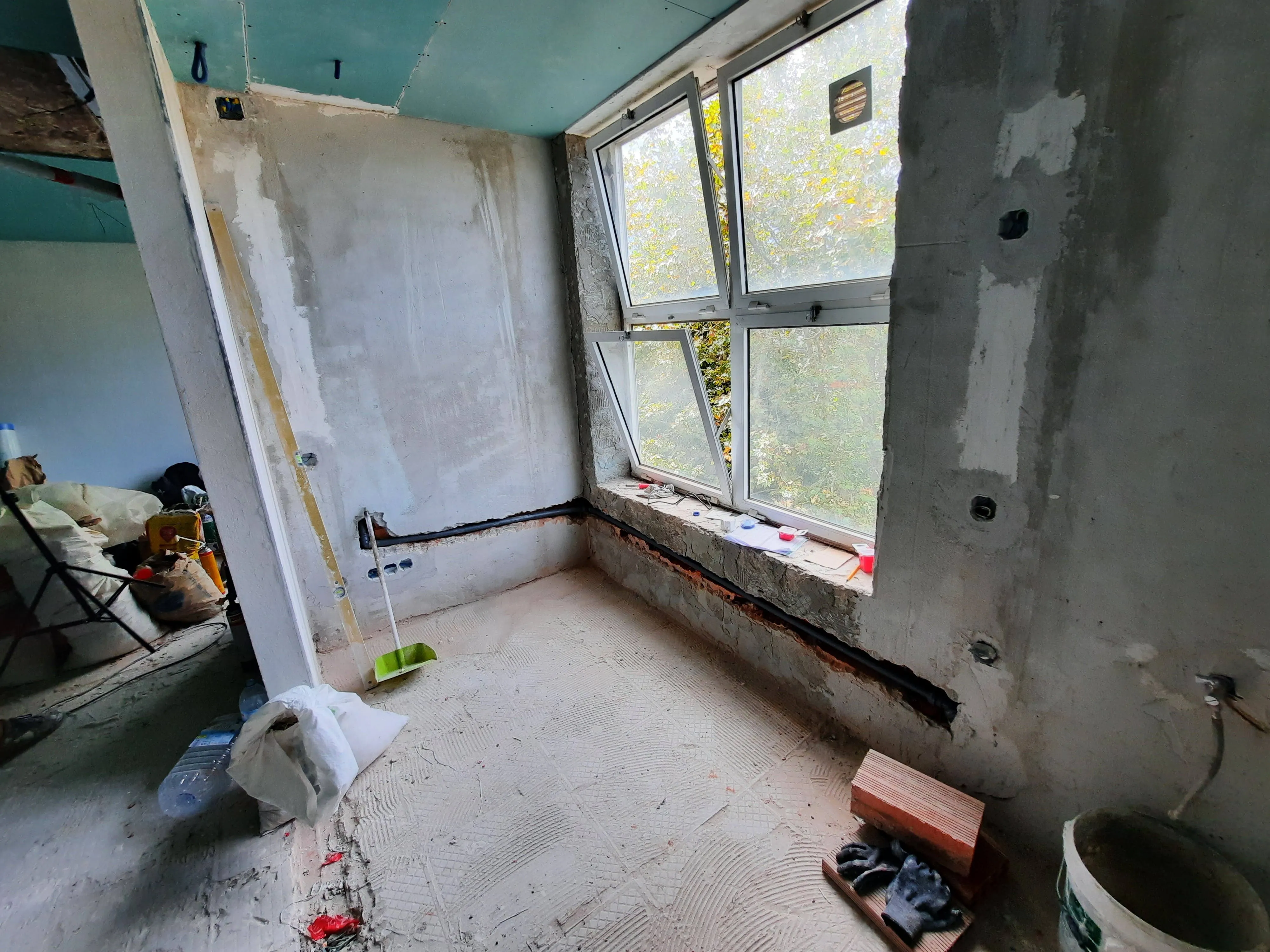
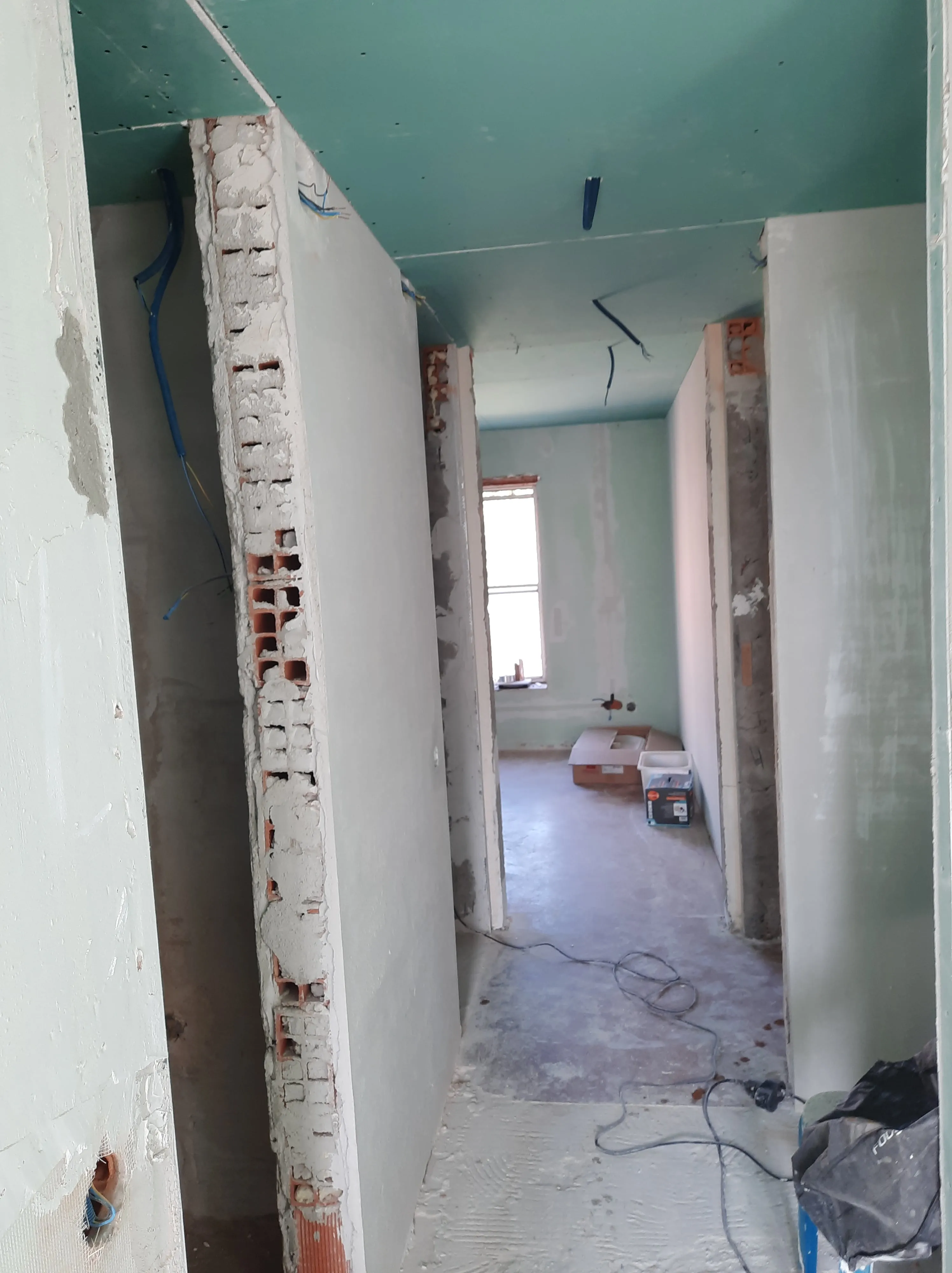
Often, plasterboard is also used for covering communications, such as plumbing pipes or other protruding elements. This material is also irreplaceable for the quick construction of interior partitions. At the same time, when covered with two sheets, the partitions are quite strong and allow not only to soundproof them with mineral wool, but also to lay wires and other communications inside them (for example, for an air conditioner) without unnecessary chasing.
In this article, we will dwell in more detail on how the plasterboard should be finished after it has already been made.
So. The most important thing when finishing the seams of plasterboard is to ensure reliable reinforcement of the places where these sheets touch each other. Most often, a special light yellow paper tape is used for this. This tape is sold in any hardware store. However, you also need to know how to handle it. The main difficulty when gluing the tape is to ensure that it adheres completely to the surface. And this is quite difficult to do, since a large layer of putty, to which it is glued, cannot be applied to the drywall (because of this, the ceiling itself may become uneven), and making a small layer is risky, since it can dry before the paper tape sticks to it. This is always a search for the golden mean. Often, a special tool is used to glue the paper tape, into which both the paper is inserted and the putty is applied. In this case, the process goes much faster, which is very important for large volumes.
For reinforcing joints, you can also use a serpyanka mesh or fiberglass in a 50 mm wide roll. But these options are less common, since they do not provide 100% protection against cracks in really problematic areas. But there are no problems with gluing them either, since they have more places for putty to penetrate.
The reinforcing tape is mainly glued to the putty. Moreover, almost any putty is suitable for these purposes. Then the joints are treated with a 4-hour putty and only after that twice with a 24-hour putty. It is very important to ensure a flat surface. Therefore, the tool must be flat and in no case should the putty be allowed to protrude beyond the plane of the ceiling. Otherwise, after the final painting, the entire ceiling will be in bumps - stripes running exactly along the joints.
Sometimes, to ensure the highest quality and smoothest surface, the ceiling is completely re-puttied with putty. This is called "barramentu zheral". In this case, for the finishing layer, it is imperative to use a good finishing putty with the greatest shrinkage. 24-hour putty is ideal for this. In this case, the finishing coating is quite dense and fine-grained, which allows it to be sanded before painting with the highest quality.
After all the stages of puttying, there is sanding, priming and painting in two layers.