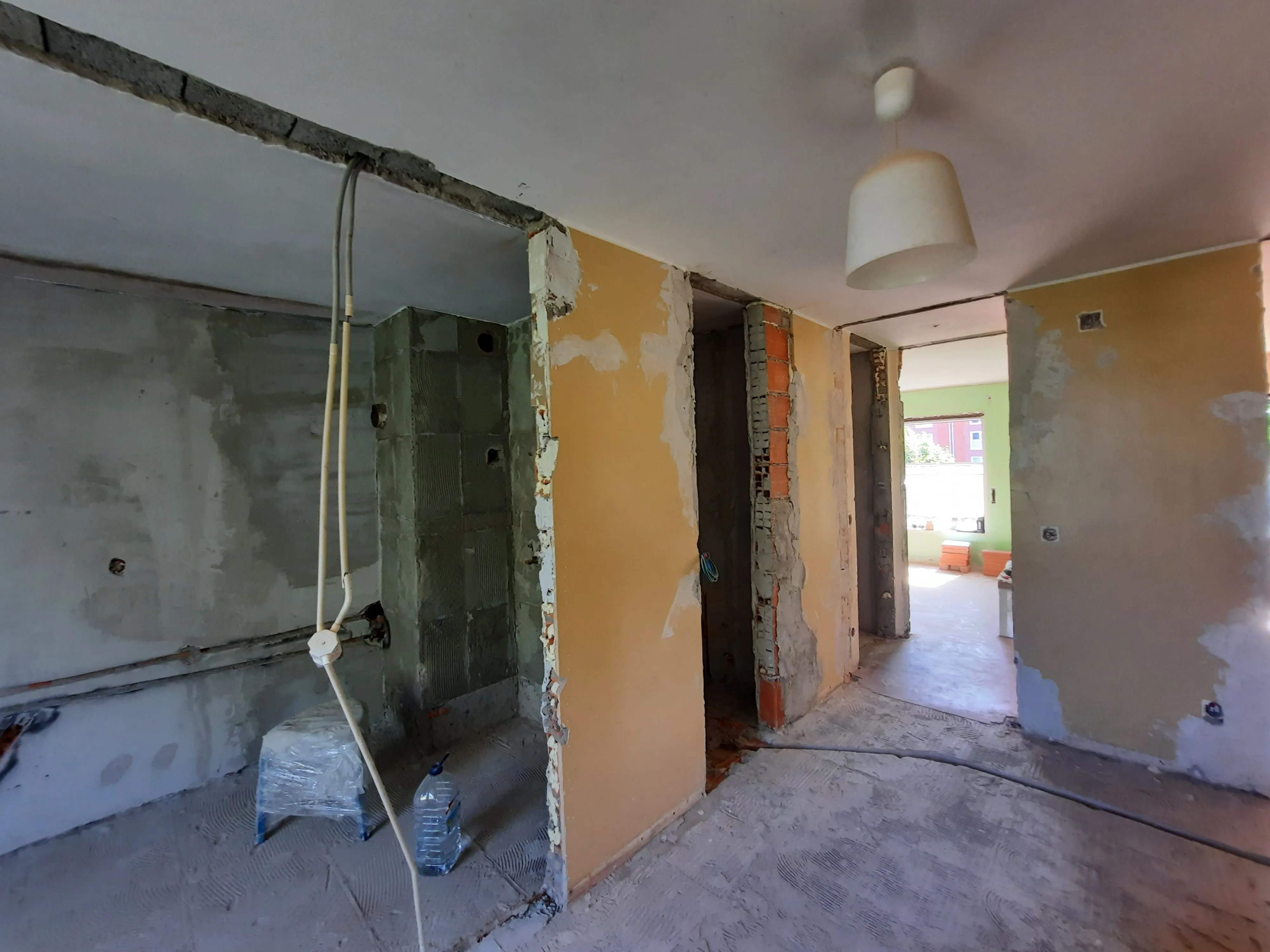
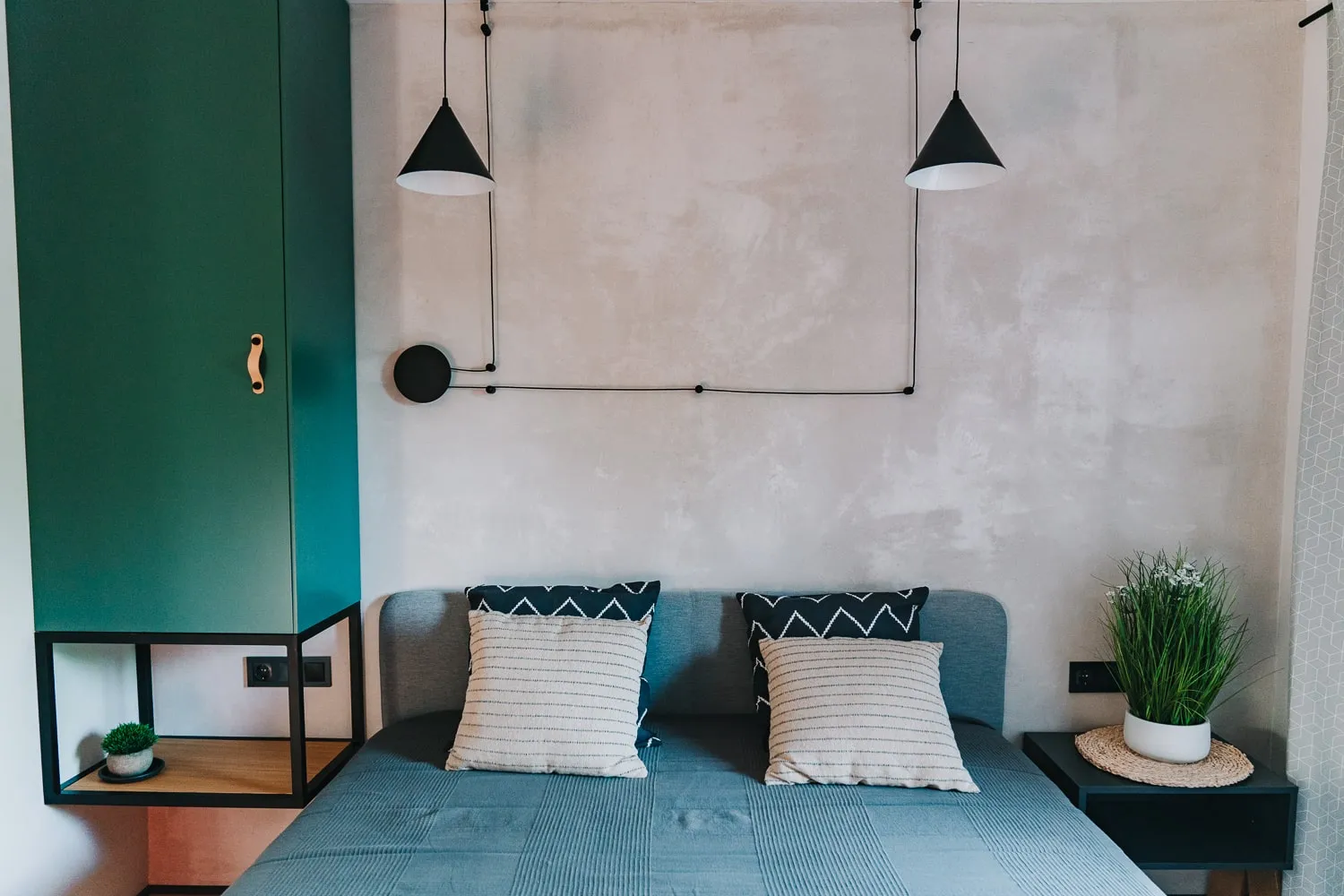
We often hear from our customers that they want to see smooth painted walls. But how can you make a wall smooth? Is it enough to just putty it or is it necessary to plaster it? Let's try to figure it out.
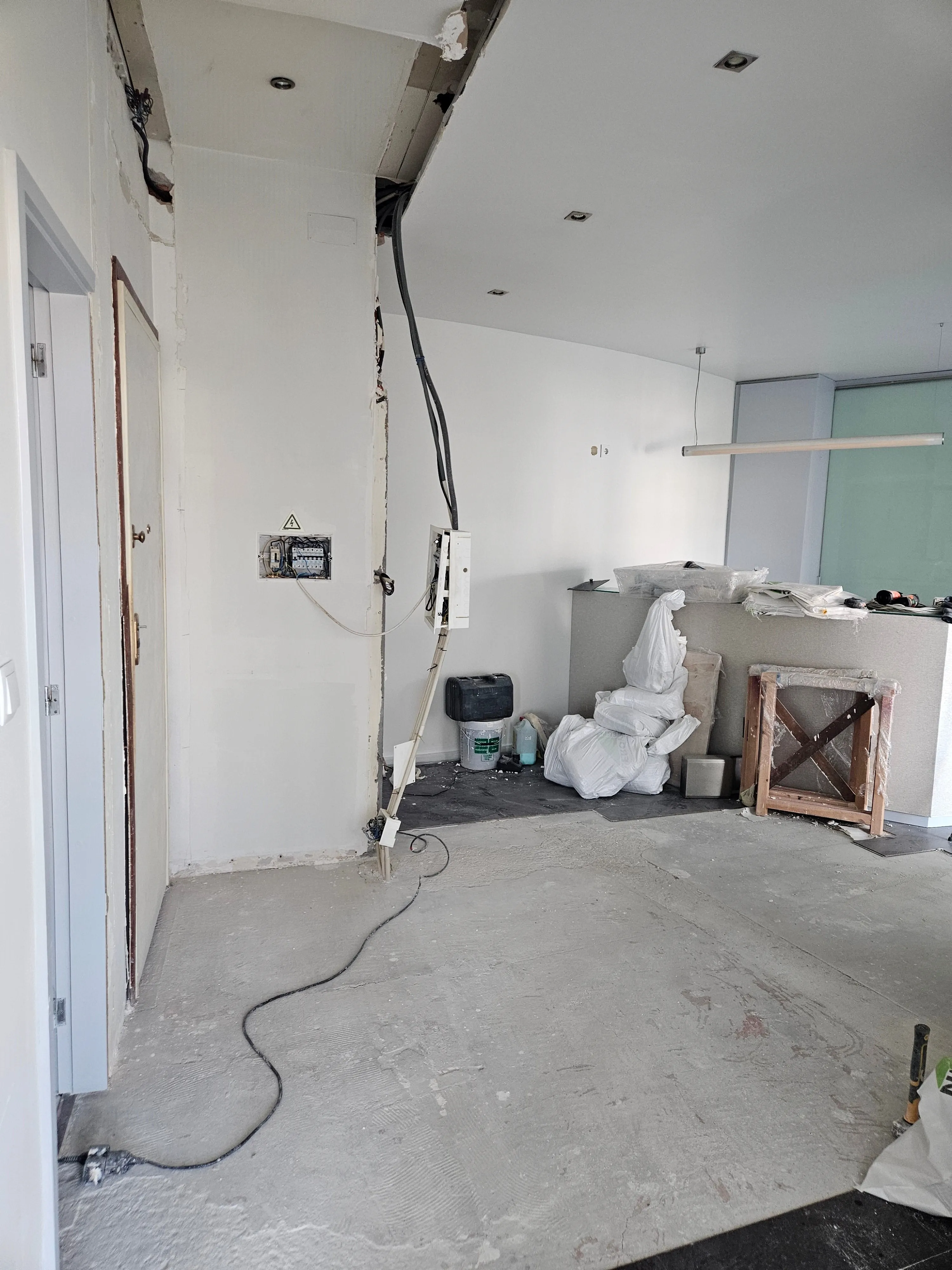
So. You've probably often noticed that on large walls, when lit by a window, there are visible irregularities: bumps, bulges, or just roughness.
And when a customer asks us to make a wall or ceiling smooth, we always try to understand what exactly the customer wants in order to offer a repair option with the least labor costs and, accordingly, the most economical in monetary terms.
You need to understand that putty is a fairly thin material. It can smooth out small roughness or bumps and holes. Plaster is a rougher material. It is designed to smooth out the surface, but it then requires additional puttying, since it is a rough material in itself, unsuitable for painting.
And if you take a long, smooth metal object (for example, a "rule"), we will see how large the differences between the bumps are. If they are significant, then you need to plaster. If not, then it is enough to putty.
But customers often have different requirements for the final result. So, if someone wants everything to be perfectly smooth, then for another (and there are a lot of such repairs) it is enough to simply refresh/repaint the surface. Therefore, we always try to tell our customers about all possible nuances before starting work, not only to optimize repair costs, but also to warn them about possible undesirable consequences of excessive savings.
During complex repairs of apartments in Porto, Portugal, there is often a need to plaster the walls inside the bathrooms, since after dismantling the old tiles, the surface becomes very uneven. In such cases, it is advisable to use cement-based plaster. And what is very important in bathrooms is to plaster the walls at a right angle (90 degrees) in the place where the bathtub or shower cabin will be. For such work, it is advisable to use metal guides - beacons, so that with the help of a laser level they can be set strictly according to the level and at a right angle.
For plastering inside ordinary rooms, you can use gypsum-based plaster. This plaster can achieve a smoother effect and is more suitable for subsequent puttying.
There are often houses or apartments in Porto and Portugal in general where it is necessary to level the "fur coat". That is, to make a smooth surface from a rough one. In this case, we recommend using "massa de agar" for the initial leveling layer and "massa 4 oresh" and "massa 24 oresh" for subsequent smoothing before grinding and painting.