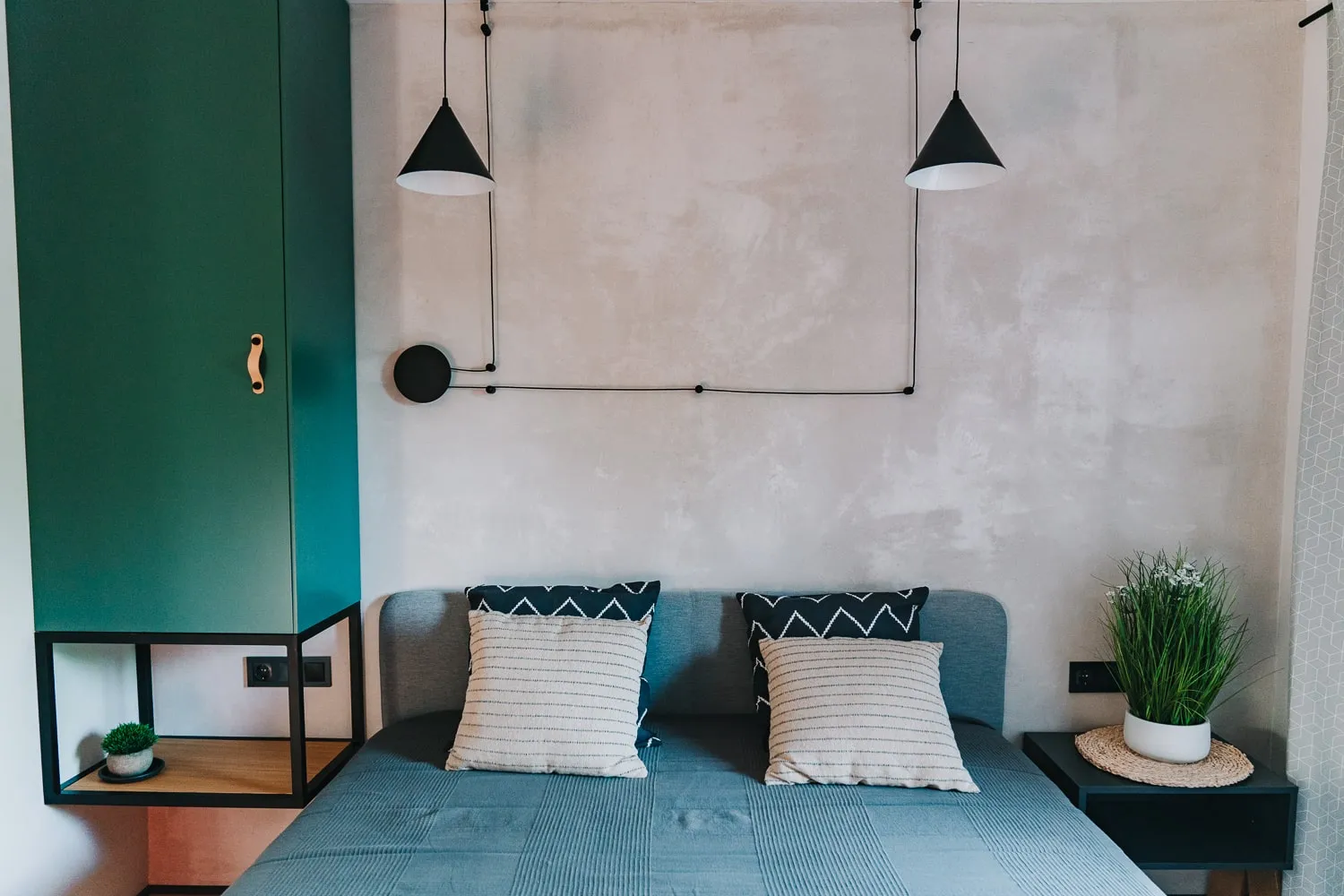
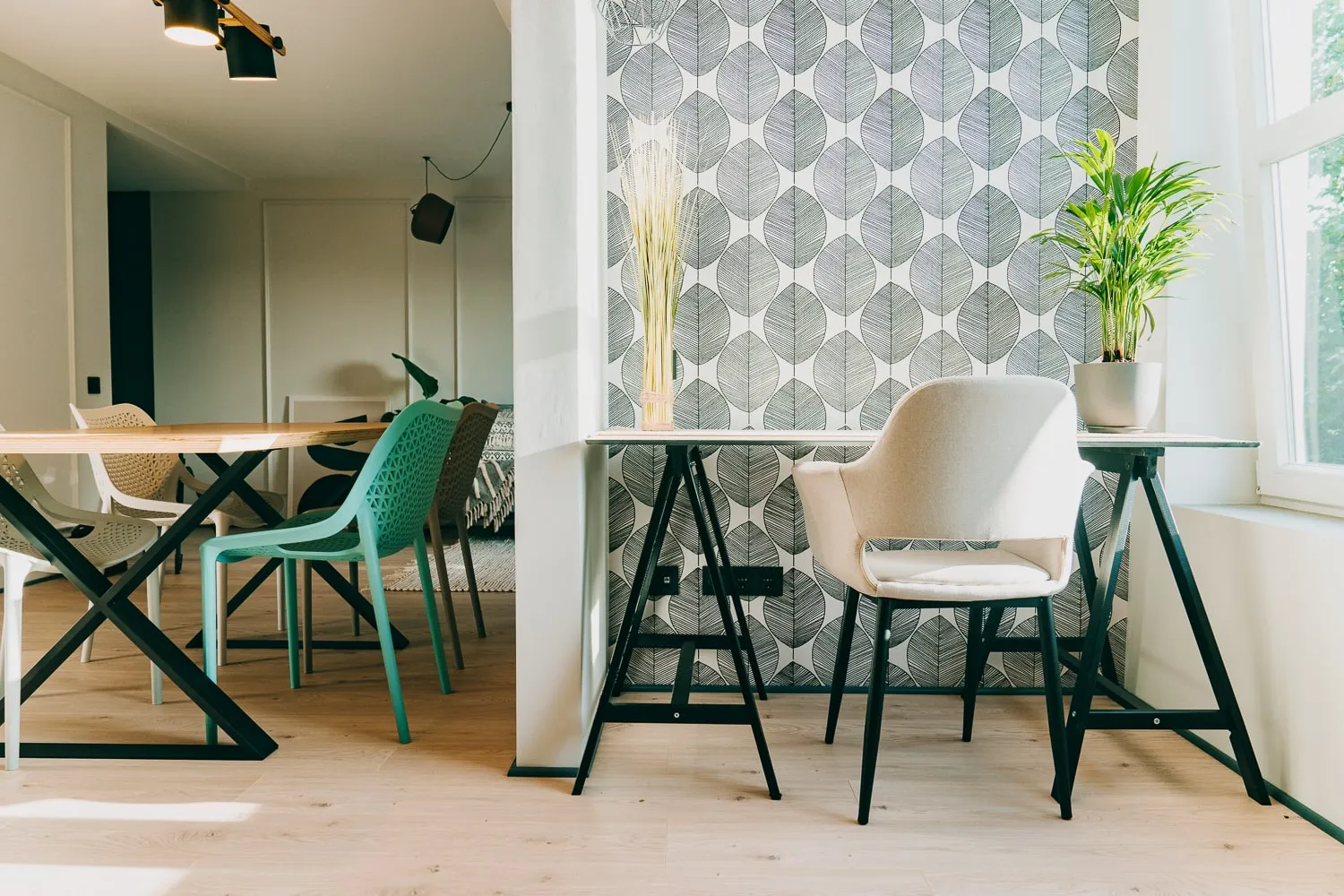
When we talk about apartment renovations in Porto or Vilanova de Gaia, the need to wallpaper often arises. Of course, most apartments still have painted walls, which is much more convenient for maintenance and subsequent cosmetic repairs. But when you want something sophisticated or unusual, then wallpaper is just the tool that can add zest to your interior
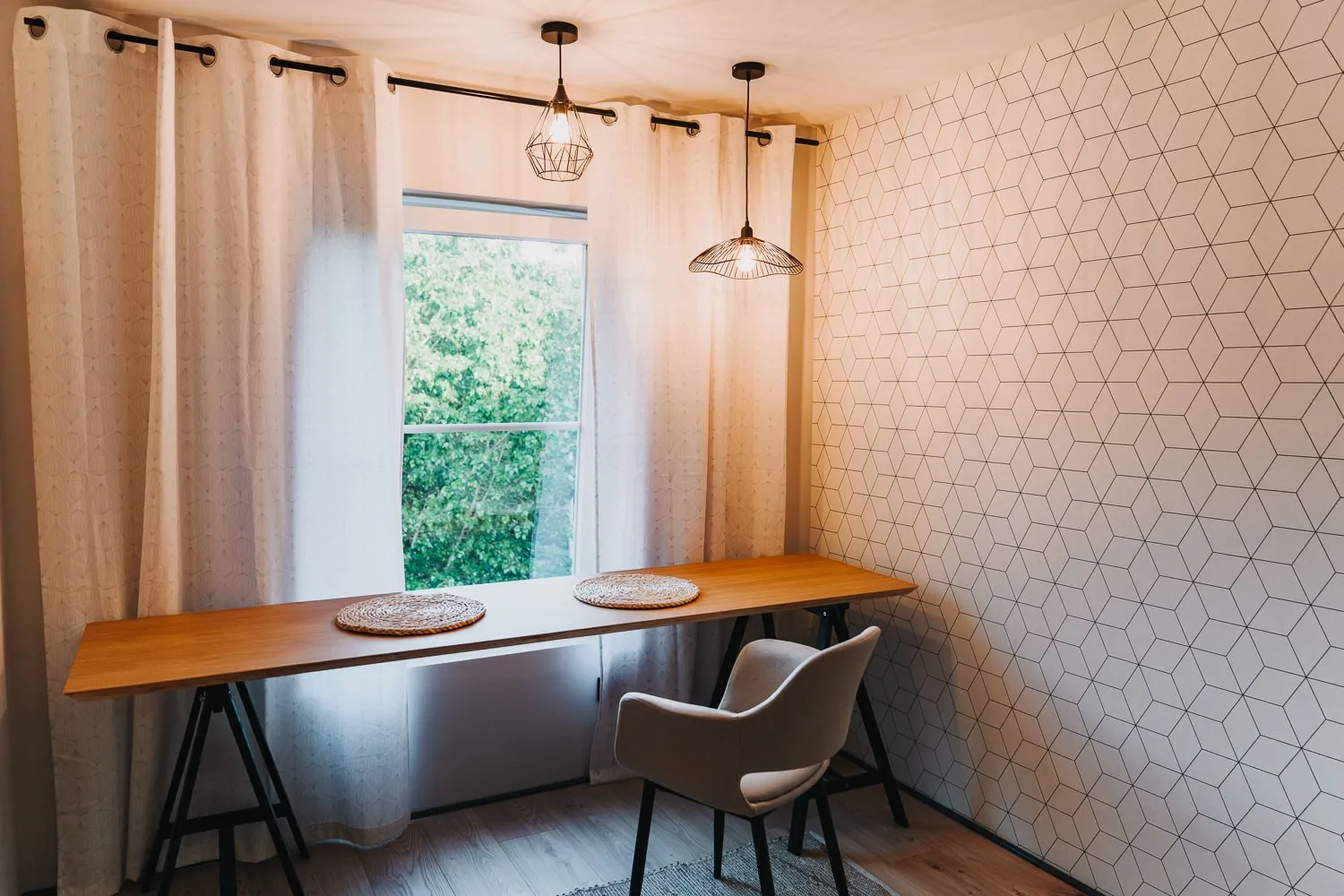
Wallpaper formats vary. Typically, they are 53cm/1005cm. Or 106cm/1005cm. Recently, we even pasted very expensive wallpaper that was about 20 meters long and 130 cm wide.
However, we consider the most important factor not the size of the wallpaper, but its base. So, if the wallpaper is made on a non-woven base, it is much easier to paste. In addition, it can be painted later. In case of subsequent repairs, such wallpaper can be removed without leaving a trace. It does not delaminate, like paper-based wallpaper. If the wallpaper is made on a paper base, it is more difficult to paste (you need to not only spread glue on the wall, but also spread the wallpaper itself, and then wait a strictly defined time for the glue to soak in). With paper-based wallpaper, you will no longer be able to repaint the room, since in this case it will simply swell when wet. Well, the situation with joints is much more complicated: the joints may come apart when the wallpaper dries. This must be taken into account during the pasting process.
When renovating apartments in Porto, Matosinhos and Vila Nova de Gaia, it is important not only to be able to properly glue wallpaper, but also to prepare the surface well for it. So, wallpaper should be glued to a dry, putty and primed wall. And here it is very important that this putty does not peel off from the base after the wallpaper is pasted.
We often have to deal with apartments in which several layers of putty and paint have already been applied, and it happens that the customer asks to glue wallpaper on top of all this. But we do not know what is under these layers, we do not know whether they are well connected to each other, we do not know whether they will swell when wet.
Therefore, we always recommend our customers to prepare the surface by priming with a deep penetration primer, which will not only ensure the adhesion of the materials, but also contribute to the formation of a protective film that will not allow moisture to penetrate into the paint. This is not 100% protection. And we very often see that even these minimum requirements are not met in Portugal: instead of a deep penetration primer, they often use a primer-paint, which is not only more expensive, but also protects the surface from moisture penetration to a much lesser extent. It is simply more common and many craftsmen use it.